
1. Why the Focus Is on the "Particle Size Window" and the "Underflow Screen Closed Loop"
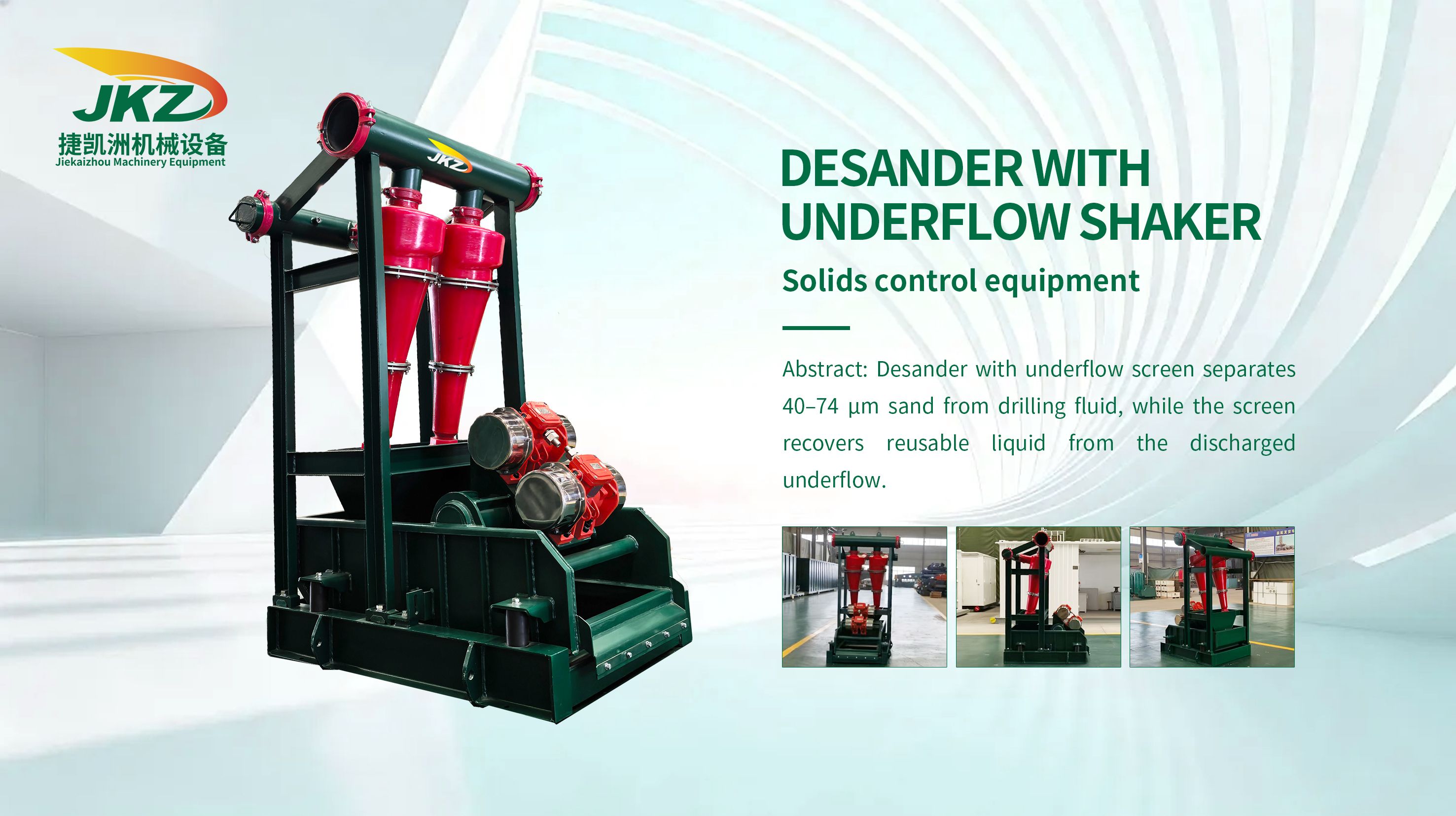
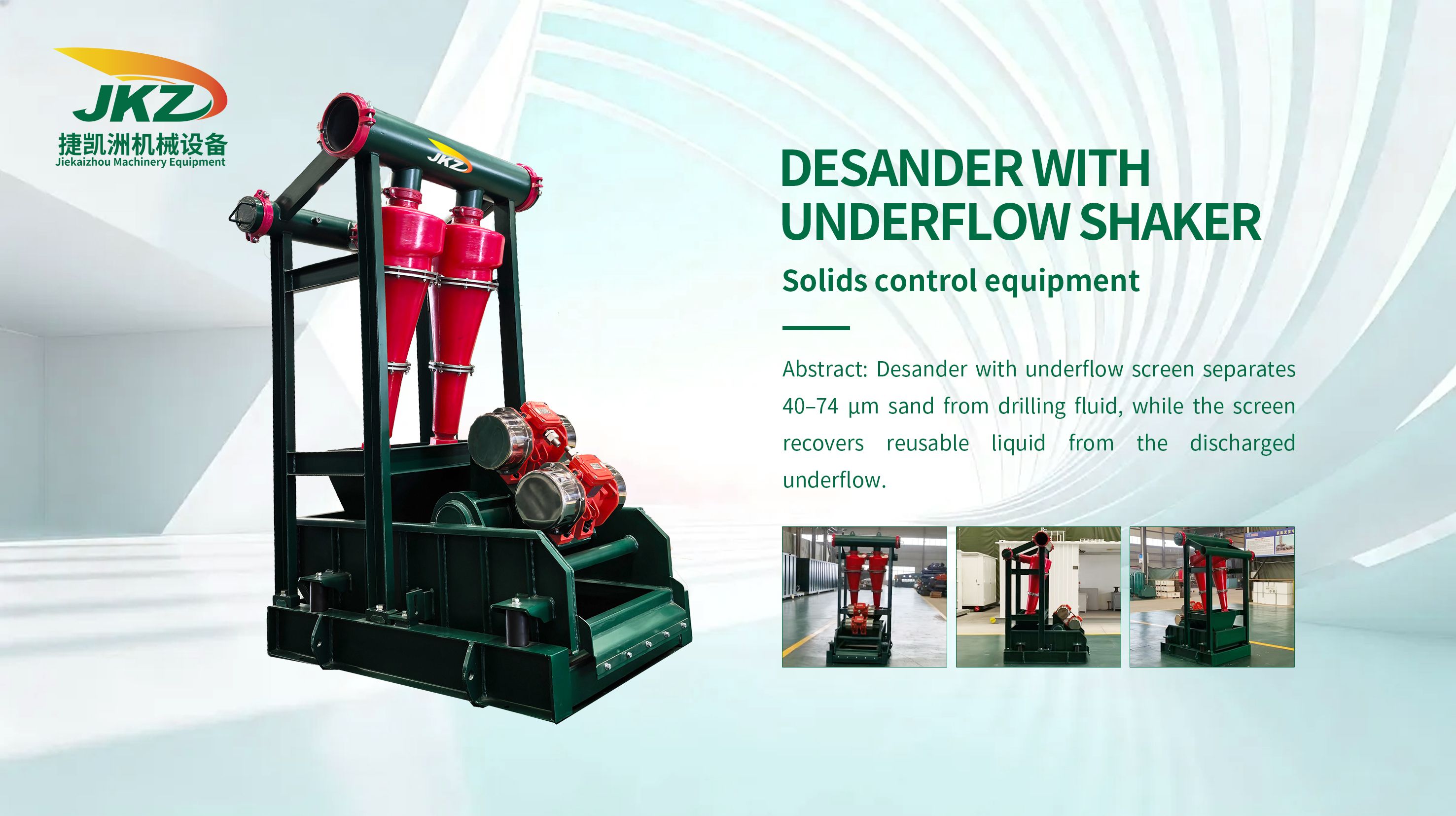
The pain point that drilling engineers care about most is that the desander occupies a "bridging" position in the oil and gas drilling solids control system: coarse particles missed by the upstream shale shaker and fine sand that the downstream desilter cannot handle are both trapped in the 47–76 μm window. If the desander fails, sand particles enter the desilter directly, and the small-sized cyclones quickly plug; if sand particles enter the centrifuge, drum wear is accelerated. The desander with underflow screen solves a fatal engineering defect of traditional desanders: the sand discharged from the cyclone underflow outlet often carries a large amount of liquid phase, and discharging it directly into the waste mud pit both wastes drilling fluid and increases environmental treatment costs. The function of the underflow screen is to recover the liquid phase from the underflow and discharge the solids in a "dry cake" state. This is the core value point that distinguishes "with or without underflow screen" during engineering selection, and it is also a key criterion by which Jiekaizhou, a Chinese desander manufacturer, evaluates equipment performance.
2. The Cyclone Cone Is the "Heart" of Separation Efficiency
The separation performance of the desander depends almost entirely on the geometric parameters of the desander cyclone for drilling fluid systems. Key parameters of engineering concern include:
Cone angle: Common designs are around 18°. The smaller the cone angle, the higher the separation precision but the lower the processing capacity; the larger the cone angle, the opposite. During selection, the matching of cone angle with actual working conditions must be verified.
Cyclone diameter: 10″ and 12″ are mainstream specifications in the industry. The larger the diameter, the higher the processing capacity, but the coarser the lower limit of separation particle size.
Material: High-chromium cast iron or polyurethane are mainstream choices. High-chromium cast iron has good wear resistance, while polyurethane is corrosion-resistant and lightweight. Engineering decisions must be made based on whether the drilling fluid contains H₂S and whether it is weighted.
Selection verification point: Require the manufacturer to provide the separation particle size curve of the cyclone under actual working pressure (usually 0.25–0.4 MPa), rather than merely stating "47–76 μm."
3. "Screen Management" of the Underflow Screen Is the Core of Operation and Maintenance
The underflow screen is not an "optional accessory"; it is the key to whether the desander can operate continuously and stably. Engineering concerns include:
Screen specifications: The screen aperture of the underflow screen should match the separation particle size of the cyclone. If the screen is too coarse, liquid recovery is low and the discharged solids are wet; if the screen is too fine, it easily blinds and mud bypasses.
Vibration parameters: A linear vibration trajectory combined with appropriate amplitude and frequency is required to achieve effective liquid passage through the screen and solids conveyance.
Anti-plugging design: The cyclone underflow outlet adopts an adjustable nozzle design, which can dynamically adjust the discharge opening size according to solids content, reducing the probability of plugging.
Operation and maintenance verification point: Check whether the underflow screen box angle is adjustable (usually -1° to +5°) and whether it has a quick screen tensioning mechanism. These directly affect the downtime cost of screen replacement.
4. Installation Position and Pumping Logic Determine System Success or Failure
The position of the desander in the solids control process is fixed: after the shale shaker and before the desilter. However, the real engineering trap lies in the selection of the feed pump and the piping design. The desander requires stable working pressure (0.25–0.4 MPa) to ensure cyclone separation efficiency. If the feed pump displacement is insufficient or there are too many pipe elbows, the cyclone inlet pressure drops below 0.2 MPa, and separation performance falls off a cliff. A more hidden problem is that if the drilling fluid has a high gas content, the centrifugal pump may experience gas locking, causing the desander to lose flow. Therefore, before the desander, it is usually necessary to ensure that the vacuum degasser is working properly, or that the feed pump has a certain degree of cavitation resistance. This is also a system-level issue that Jiekaizhou, a Chinese desander manufacturer, emphasizes in complete oil and gas drilling solids control system solutions.
Learn More Shaanxi Jiekaizhou Machinery Equipment Co., Ltd. Address: No. 2, West Section, Xiushu Road, Bawanghe Industrial Park, Jinqu Town, Meixian County, Baoji City, Shaanxi Province, China Tel: 86-29-81120800 Mobile: +86 17795769978 Email: derek@jkzsolidscontrol.com
No more news
2026-10-14