
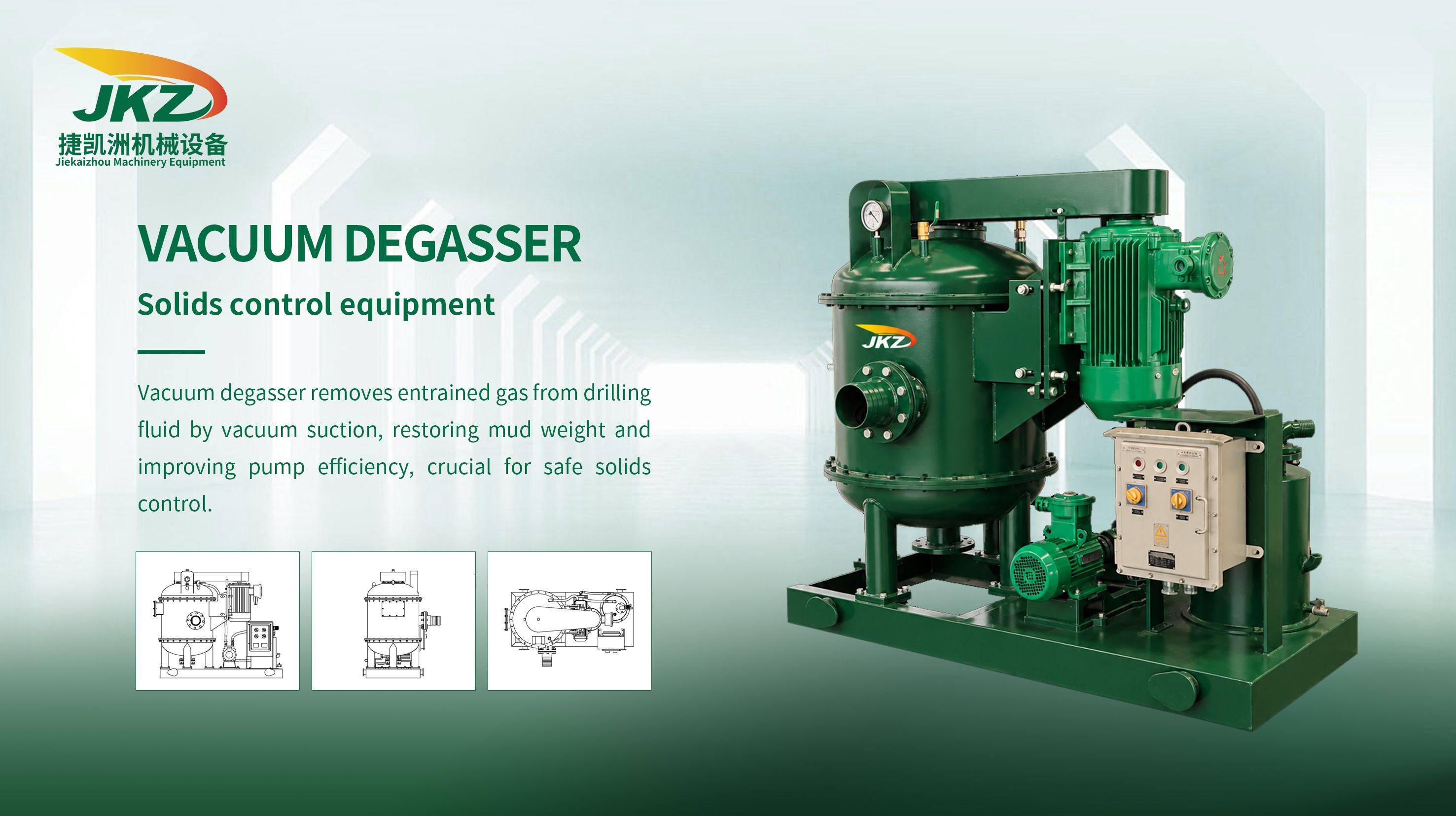
1. Why the Focus Is on "High Viscosity" and "High Density"
The pain point that drilling engineers care about most is that traditional degassing equipment fails when handling weighted drilling fluids. When the drilling fluid density exceeds 1.8 sg or the viscosity is extremely high, gas bubbles are wrapped within the elastic film of the liquid phase, and conventional gravity settling or atmospheric-pressure centrifugal separation cannot overcome the viscous resistance. The core value of the vacuum degasser for oil and gas drilling lies in gas release by pressure reduction under negative pressure—creating a negative pressure environment of -0.03 to -0.065 MPa inside the vacuum tank, causing the gas bubbles to expand rapidly in volume until they burst. During engineering selection, it is essential to verify the equipment's actual degassing efficiency under high-viscosity conditions. The nominal 99.9% usually refers to clean water or low-viscosity fluids; in the field, attention must be paid to the matching of separation area and vacuum level.
2. "Thin-Film Flow" Is the Physical Key to Gas-Liquid Separation
If the drilling fluid rushes into the tank like a solid stream of water, the bubbles inside have no escape path at all. The engineering solution is to force film formation:
Stepped separation plates: Allow the drilling fluid to cascade down along inclined stepped plates, forming an extremely thin liquid layer and greatly shortening the bubble escape distance.
Separation cones and rotary slinging: In vertical models, a rotor slings the drilling fluid from windows toward the tank wall, using impact to further break up gas bubbles.
Selection verification point: Require the manufacturer to provide actual separation surface area data (on the order of 9.08 m²), rather than looking only at processing capacity. No matter how large the processing capacity, if the liquid cannot form a thin layer, degassing is ineffective.
3. "Dynamic Adjustment" of Vacuum Level Is More Important Than Maximum Vacuum Level
There is a common misconception in engineering: that the higher the vacuum level, the better. In fact, excessively high vacuum can cause a surge in liquid inflow, loss of liquid level control, and overload of the vacuum pump. A mature vacuum degasser for oil and gas drilling must be equipped with an automatic liquid level control mechanism—using a float-linkage mechanism to adjust the vacuum pump air intake in real time, thereby changing the pressure inside the tank and automatically balancing the inlet and outlet flow rates. For wells with high H₂S content, the vacuum system must ensure that all leakage directions are inward, preventing toxic gas from escaping, and the isothermal compression characteristics of the water-ring vacuum pump make it suitable for drawing flammable and explosive gases.
4. Installation Position Determines the Life or Death of the Entire Solids Control System
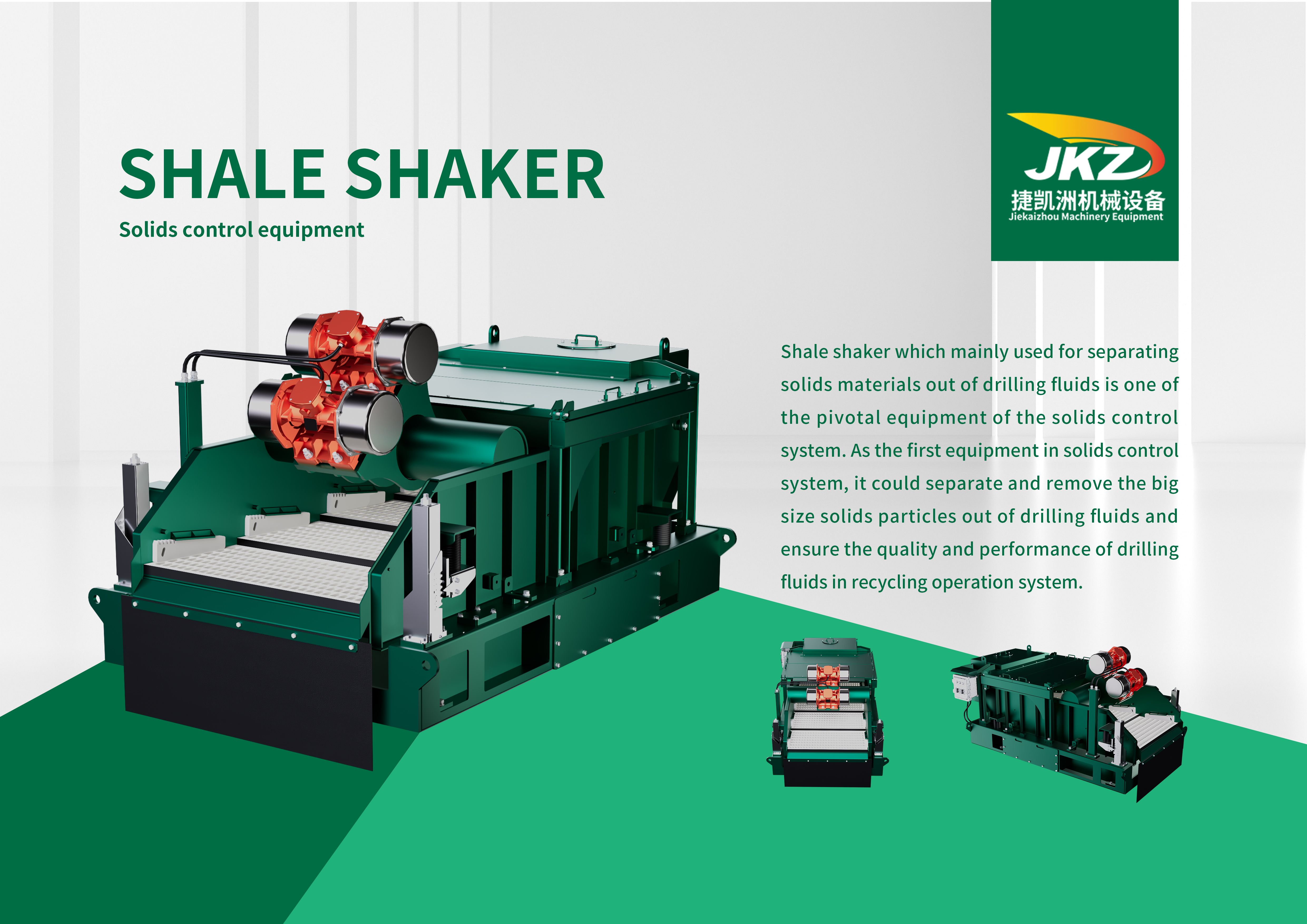
The vacuum degasser for oil and gas drilling usually serves as secondary solids control equipment, immediately following the shale shaker. The engineering logic is: gas-cut drilling fluid must never enter the centrifugal pumps of the desander or desilter directly. Once a centrifugal pump sucks in gas-cut liquid, "gas locking" occurs—the impeller runs dry, the displacement drops sharply, and all subsequent cyclones fail. Therefore, the discharge method of the vacuum degasser is also critical: it must use a jet pump or a dedicated discharge pump, rather than an ordinary centrifugal pump, because the degassed drilling fluid still contains trace amounts of gas, and an ordinary centrifugal pump may still experience gas locking.
Learn More Shaanxi Jiekaizhou Machinery Equipment Co., Ltd. Address: No. 2, West Section, Xiushu Road, Bawanghe Industrial Park, Jinqu Town, Meixian County, Baoji City, Shaanxi Province, China Tel: 86-29-81120800 Mobile: +86 17795769978 Email: derek@jkzsolidscontrol.com
No more news
2026-09-22